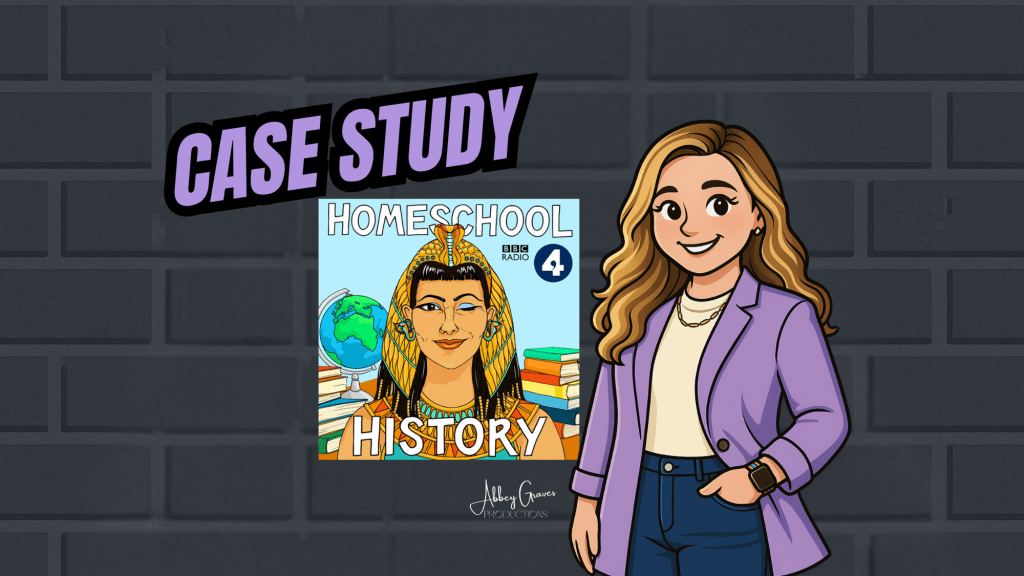
In this month’s case study episode, I dug into Homeschool History, a gem of a podcast from BBC Radio 4 hosted by Greg Jenner. If you’ve ever tried to make educational content that’s actually fun—and doesn’t feel like a classroom lecture—you’ll want to take notes on this one.
It’s short. It’s sharp. And it’s clearly made with its audience in mind. Whether you’re creating content for families, kids, or just aiming to simplify big topics in an engaging way, Homeschool History is a brilliant example of how to do it well.
Let’s break down what this show does right, where it could grow, and the takeaways podcasters like us can steal (in the best way).
1. The Power of the Short Format
Episodes typically clock in around 15 minutes. That’s a huge strength—especially for a younger audience. Kids don’t have long attention spans, and even adults appreciate content that respects their time.
Homeschool History gets to the point without dumbing anything down. It’s efficient without being boring, and that balance is something all of us can aim for, no matter what kind of show we host.
2. Sound Design That Supports the Story
This show doesn’t just talk about history—it brings it to life. Between the voice acting, music, and clever sound effects, each episode feels like a mini audio play.
As a podcaster, this is a great reminder: sound is one of our most powerful tools. You don’t need a huge BBC budget, but a little thoughtful sound design can go a long way in making your content more immersive and memorable.
3. Audience Clarity Is Everything
What I really admire about Homeschool History is how clearly it knows who it’s for: families and kids. The jokes, tone, and pacing are all crafted with that audience in mind.
This is something I talk about a lot—your podcast will always be stronger when you commit to your audience. Trying to appeal to everyone often leads to resonating with no one. Lean into who you’re speaking to and create with intention.
4. Consistency Builds Trust
Every episode follows a reliable format: intro, storytelling, side commentary, recap, and a quick pop quiz at the end. That consistency isn’t boring—it’s comforting. It makes the show bingeable and predictable in the best way.
Listeners like to know what they’re getting, especially younger ones. If your podcast doesn’t already have a structure, this is your nudge to build one.
5. A Thought on What Could Be Even Better
Now, as much as I love this show, I’d love to see an extended or slightly more advanced version of it someday. Maybe a spin-off aimed at teens or adults that dives just a little deeper. The brand is strong enough to grow with its audience—and that’s a lesson in itself.
If you’re thinking long-term, ask yourself: “How can my podcast evolve as my listeners grow?”
Final Takeaways:
Homeschool History is a case study in how to blend education, entertainment, and structure in a tight, accessible format. Whether you’re making content for kids, families, or a completely different niche, the core lessons here still apply:
Know your audience Keep it tight and purposeful Use sound to enhance, not just fill space Build consistency And always leave room to grow
If you haven’t listened to the episode yet, go check it out. And if you want more breakdowns like this, make sure you’re subscribed—I do a deep dive like this every month!
 Abbey Graves Productions
Leave a comment