
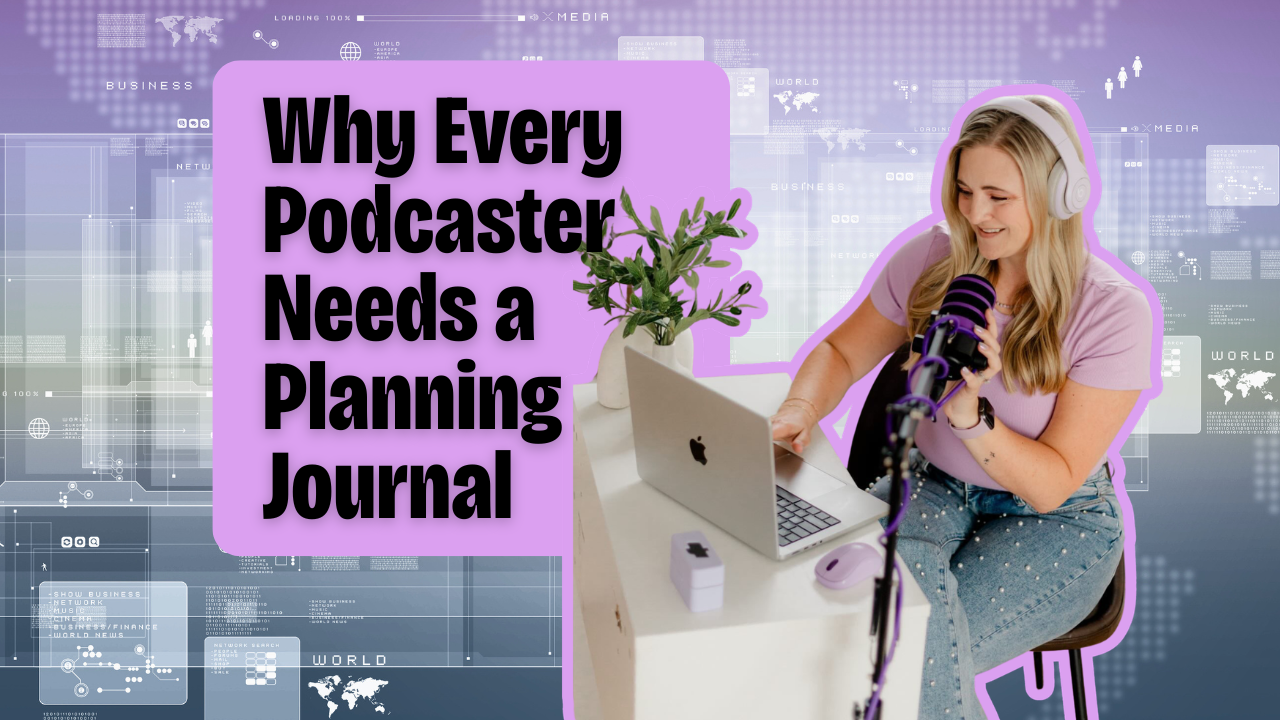
I did something I never expected to do this year. I published a book. Well, technically it is a journal, but it is legally a book, and I am still riding the high of seeing it live on Amazon.
It is called the Podcast Planning Journal: Plan It, Record It, and Publish It, and I built it because I needed it myself.
The Problem With My Old Notebook
I have been a notebook person for years. My 2026 notebook has been my catch-all for podcast ideas, but it is a mess. The first few pages are notes from PodFest. Then it turns into scribbles from business coaching calls. Somewhere in there is chicken scratch from tax season. My podcast ideas kept getting lost in the shuffle because there was no dedicated space for them, just one stray sentence or statistic buried between everything else.
I knew there had to be a better way, and I did not want to spend hours tabbing and organizing a notebook that was never built for this in the first place. So I designed my own.
What Actually Goes Into Planning a Show
The journal starts with the fundamentals I walk every client through before they record a single episode: what is the show called, who is it for, what do you want listeners to feel, and how often are you publishing. From there it moves into vision and goal planning, because knowing what success looks like three months and a year from now changes how you show up today.
Built for the Whole Podcasting Process
This is not a place to script out an entire episode word for word. I am not a scripter, and I do not push my clients to be either. Instead, it is built around outlines. Each episode planning page covers the working title, guest details if you have one, your hook, your talking points, your call to action, and your target length. It is structure without boxing you in.
I also added a pre-recording checklist, because I cannot count how many times a client has hit record only to realize their microphone was not plugged in or the dog was barking in the background. A quick checklist before you hit record saves you from those headaches later.
Reflection and Repurposing
My favorite section might be the post-recording reflection pages. After every episode, you write down what went well, what you would change, and what the best moments were. That last part matters more than people realize, because those standout moments are exactly what turn into Instagram Reels, YouTube Shorts, quote graphics, and Pinterest pins. Reflecting right after you record makes repurposing so much easier later.
Tracking Guests and Growth Over Time
There is also a full guest tracking log, so you can note who you have reached out to, their status, and your follow-up dates. Do not be afraid to write down your dream guests here. No one else needs to see this notebook but you, so use it to think big. And every month, there are review pages to track your episode count, your biggest win, your challenges, and one small thing you want to improve next month. Not a full overhaul, just one step forward at a time.
Why This Might Be for You
The Podcast Planning Journal is available now on Amazon. It works whether you are actively producing a show or you have someone in your life who keeps talking about starting one but has not taken the leap yet. Order it for them. Ship it to their door. Sometimes the smallest nudge is what gets someone to finally put their idea into the world.
Leave a Reply